Quick answers
What does ACARS stand for?
Aircraft Communications Addressing and Reporting System. It is a digital datalink that lets an aircraft exchange short text messages with its airline's operations center and with automated systems on the ground.
Who sends ACARS messages?
The flight crew, the airline's dispatchers and maintenance teams, and the aircraft itself: engines and systems send automatic reports, and the aircraft reports when it leaves the gate, takes off, lands and arrives.
Are ACARS messages air traffic control?
Mostly no. ACARS is between the aircraft and its airline. Controllers speak to pilots by voice. The exception is the pre-departure clearance, which many US airports send by ACARS instead of reading it over the radio.
Can anyone read ACARS messages?
Most ACARS traffic is sent unencrypted over radio, so it can be received with simple equipment, and some trackers decode it. Cockpit shows the messages in plain English and removes personal names.
What ACARS is
ACARS was introduced in 1978 to replace a routine radio call: pilots used to read out the times the aircraft left the gate, took off, landed and parked, so the airline could pay crews and plan the next flight. Sensors on the doors and the landing gear began sending those four times automatically, and the system grew from there.
Today an airliner's ACARS unit is a small computer linked to the flight management system, the engines and a printer or screen in the cockpit. Pilots type or select messages; the airline answers; the aircraft adds its own automatic reports.
How the messages travel
Messages go over three kinds of link, whichever is available: VHF radio to ground stations across the country (the most common over land), HF radio over oceans and remote areas, and satellite. A service provider routes each message to the right airline. Over the US a message reaches the airline within seconds.
A typical domestic flight exchanges dozens of these messages between pushback and arrival.
What the messages say
- Out, off, on, in. The four automatic times: left the gate, took off, landed, arrived. Airlines use them for on-time statistics and crew pay.
- Departure clearance. At many US airports the clearance from air traffic control arrives as text before pushback, so the crew does not have to copy it by voice.
- Weather and ATIS. Crews request the latest weather for the destination and alternates, and the digital ATIS for the arrival airport.
- Gate and ground. Gate assignments and changes, a wheelchair or medical team waiting, connecting passengers to hold for.
- Load and fuel. The final weight and balance figures before departure, and fuel reports during the flight.
- Maintenance. Engine performance snapshots and fault reports, sent automatically so the maintenance team can have parts and people ready when the aircraft lands.
- Free text. Anything else between the crew and dispatch: a diversion being considered, a medical situation on board, the reason for a delay.
How to read one
Raw messages are terse. An illustrative free-text line like /BOS.MED ONBRD REQ GATE CHG PAX 14C means the crew is telling the Boston station about a medical situation on board and asking for a gate change for the passenger in seat 14C. Most messages follow fixed formats with airport codes, flight numbers and abbreviations, which is why a decoder helps.
Cockpit decodes the common formats and rewrites them in plain English, and removes the names of passengers and crew that sometimes appear in free text.
What ACARS is not
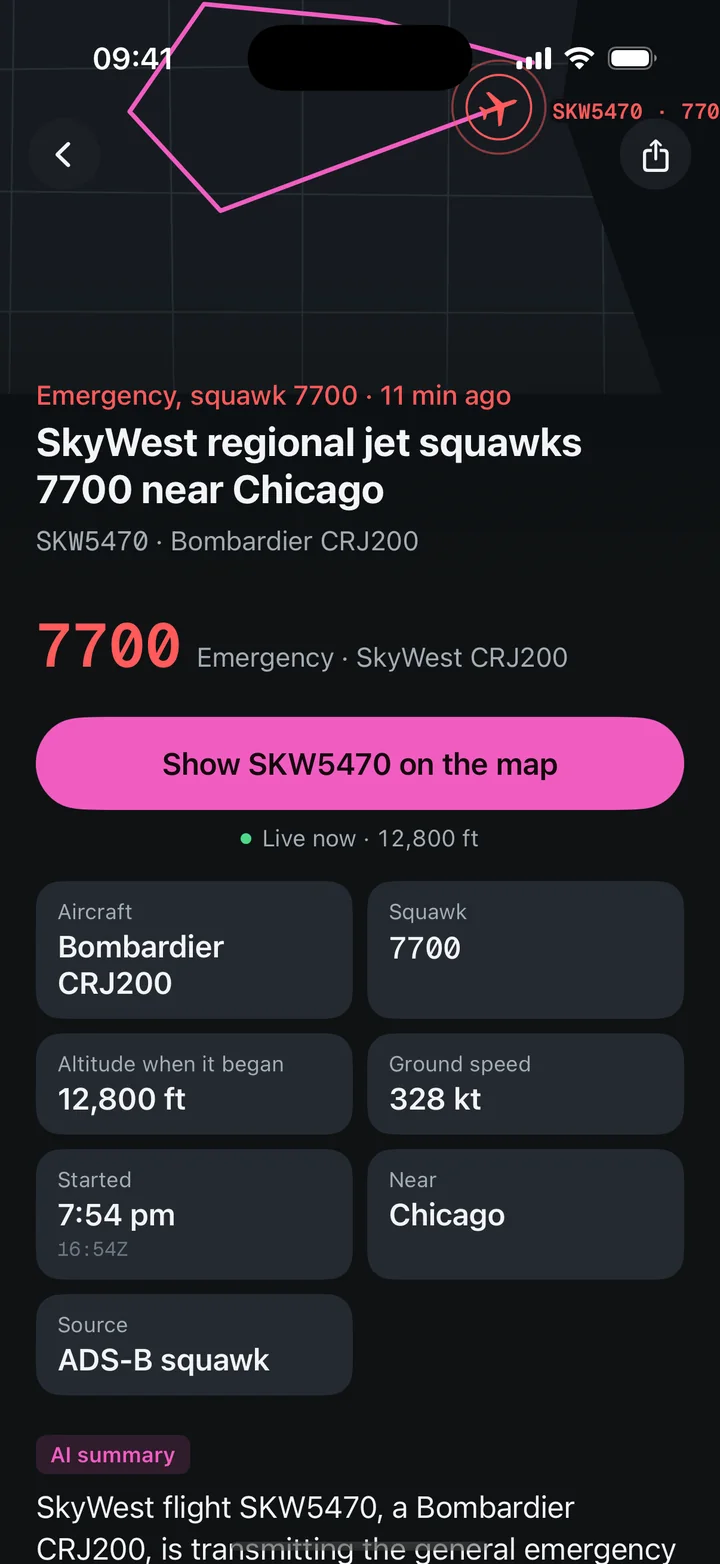
- Not the transponder. Squawk codes like 7700 come from the transponder and go to radar; ACARS is a separate system.
- Not the controller. Controllers talk to pilots by voice, or in some airspace by a different datalink called CPDLC. ACARS goes to the airline.
- Not a black box. The flight data and cockpit voice recorders stay on board. ACARS only sends what the airline asked for or the crew chose to send.
Pilot messages in the Cockpit app
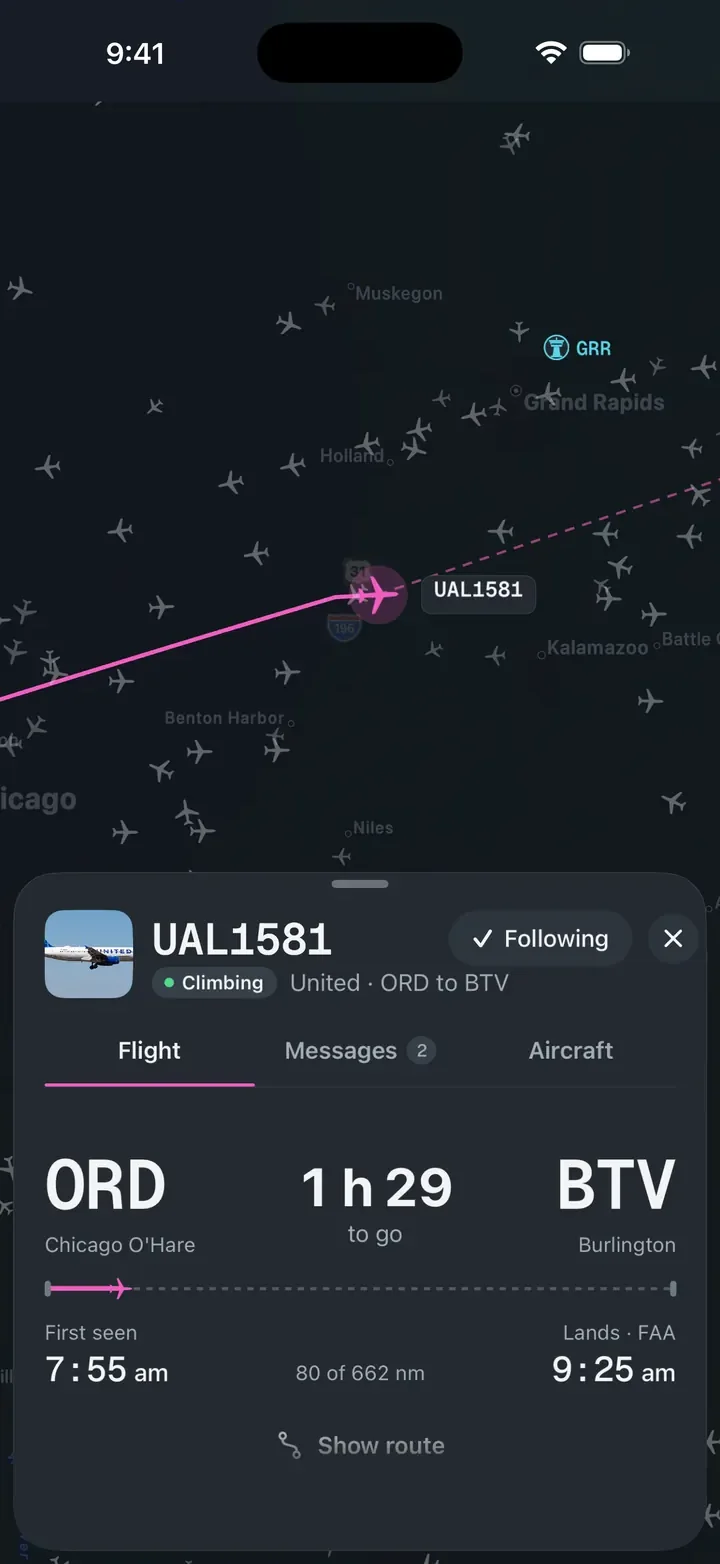
Messages between the crew and dispatch on the flights you look at, decoded into plain English, with names removed.