Why the FAA holds flights on the ground
An airport can only land so many aircraft an hour. When thunderstorms close an arrival route, low clouds force wider spacing, or a runway shuts, that number drops. Aircraft that are already in the air would have to hold, burning fuel. So the FAA's Air Traffic Control System Command Center holds them at their departure airports instead, where waiting is cheap and safe.
The FAA publishes these programs on its National Airspace System status page, and every airport page on this site shows the current one in plain English.
Ground stop: the emergency brake
A ground stop means flights bound for the affected airport do not take off at all until it ends. It is used when the problem is sudden or severe: a storm cell over the field, a runway closed by a disabled aircraft, an equipment outage, a security issue.
Ground stops are issued in short steps, often 30 to 90 minutes, and extended if the problem has not cleared.
Flights already in the air continue. Departures from nearby airports may be stopped too. When a stop lifts, flights depart in a burst, and a ground delay program often follows to meter them in.
Ground delay program: the dimmer switch
A ground delay program (GDP) lets flights keep going, but slows them down. Each inbound flight gets an expect departure clearance time, called an EDCT, so that arrivals reach the airport at the rate it can land. Your flight leaves when its EDCT comes up, not when the schedule says.
Delay programs are planned hours ahead for predictable problems, like a marine layer at San Francisco or an evening of thunderstorms in the Northeast. The FAA publishes an average and a maximum delay. They often run all afternoon or evening.
Side by side
| Ground stop | Ground delay program | |
|---|---|---|
| Flights depart? | No, until it ends | Yes, at their EDCT |
| Typical length | 30 to 90 minutes per step | Several hours |
| Used for | Sudden, severe problems | Predictable capacity loss |
| Delay you see | Uncertain until it lifts | Predictable, per flight |
The FAA also reports plain arrival or departure delays when traffic is slowing without a formal program, once the average delay passes 15 minutes.
What it means for your flight
- In a ground stop, ask your airline for the stop's end time and stay near the gate. When it lifts, boarding can start quickly.
- In a delay program, your airline knows your EDCT. That time, not the scheduled one, is when you will leave.
- Connections through an airport under a program are the real risk: an inbound delay of 60 minutes can break a tight connection even if your next flight is on time.
See every program in effect right now on the ground stops page.
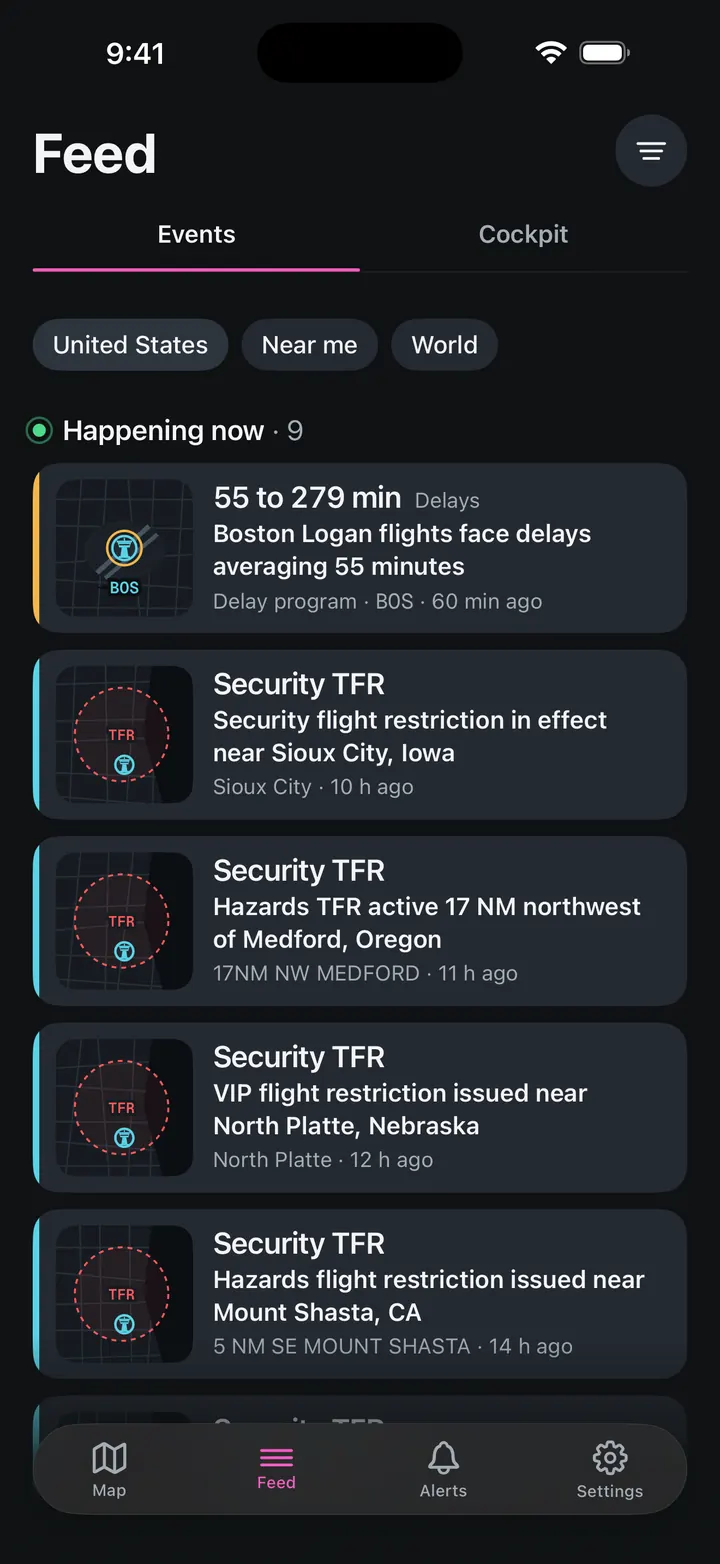
Delays in the Cockpit app
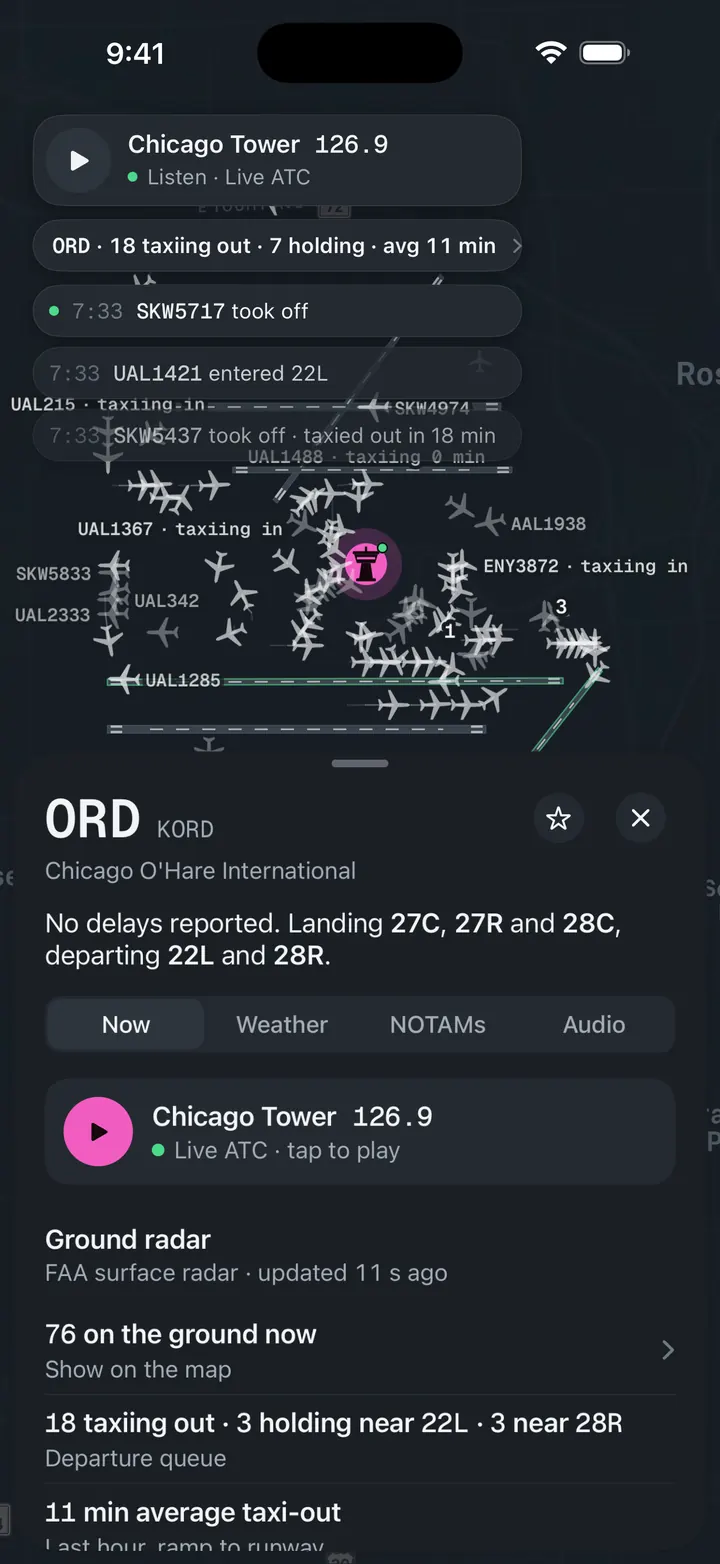
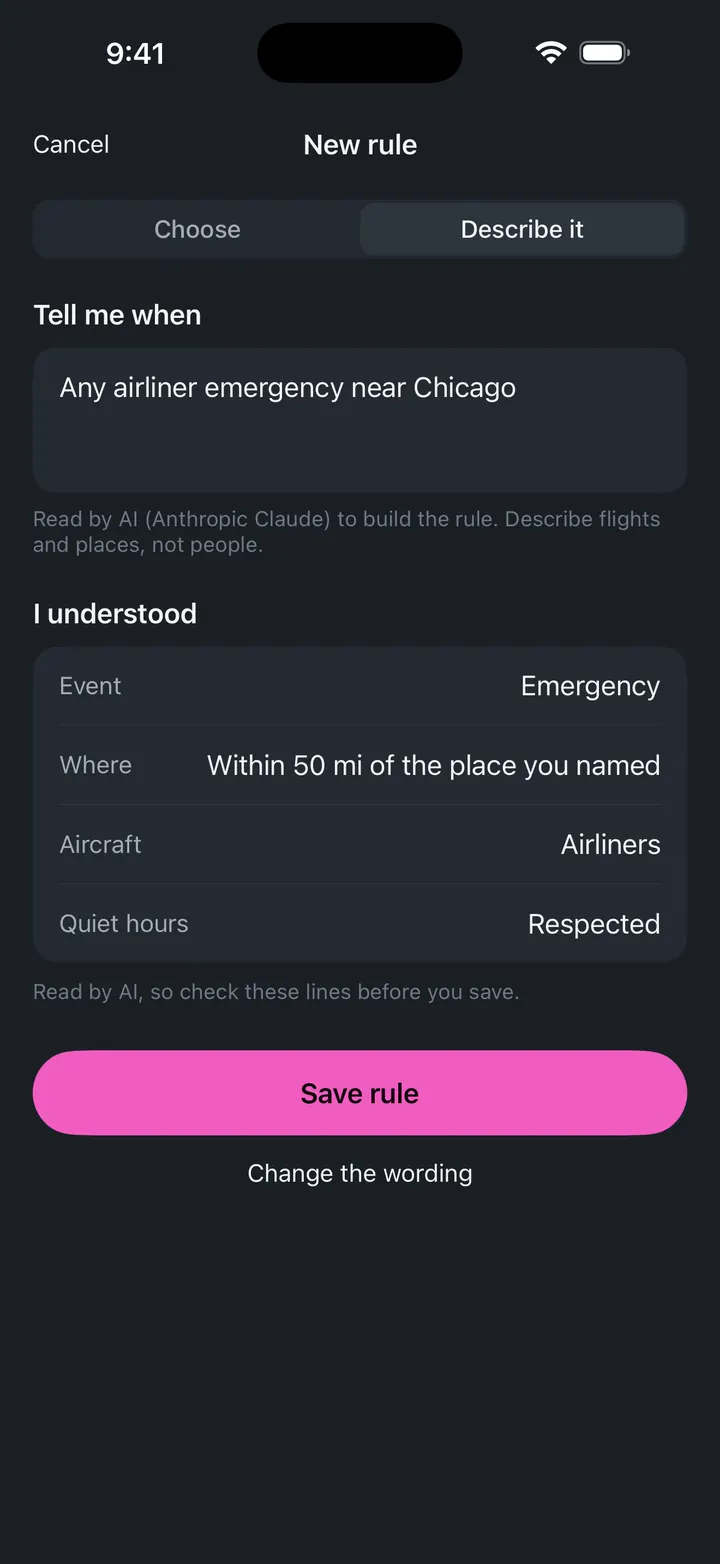
Ground stops and delay programs arrive as a push, with the airport card one tap away.