- What ground radar is
- Which airports have it
- Taxiing, holding, departing
- The departure queue
- How to watch it
Quick answers
Can I see planes taxiing at an airport live?
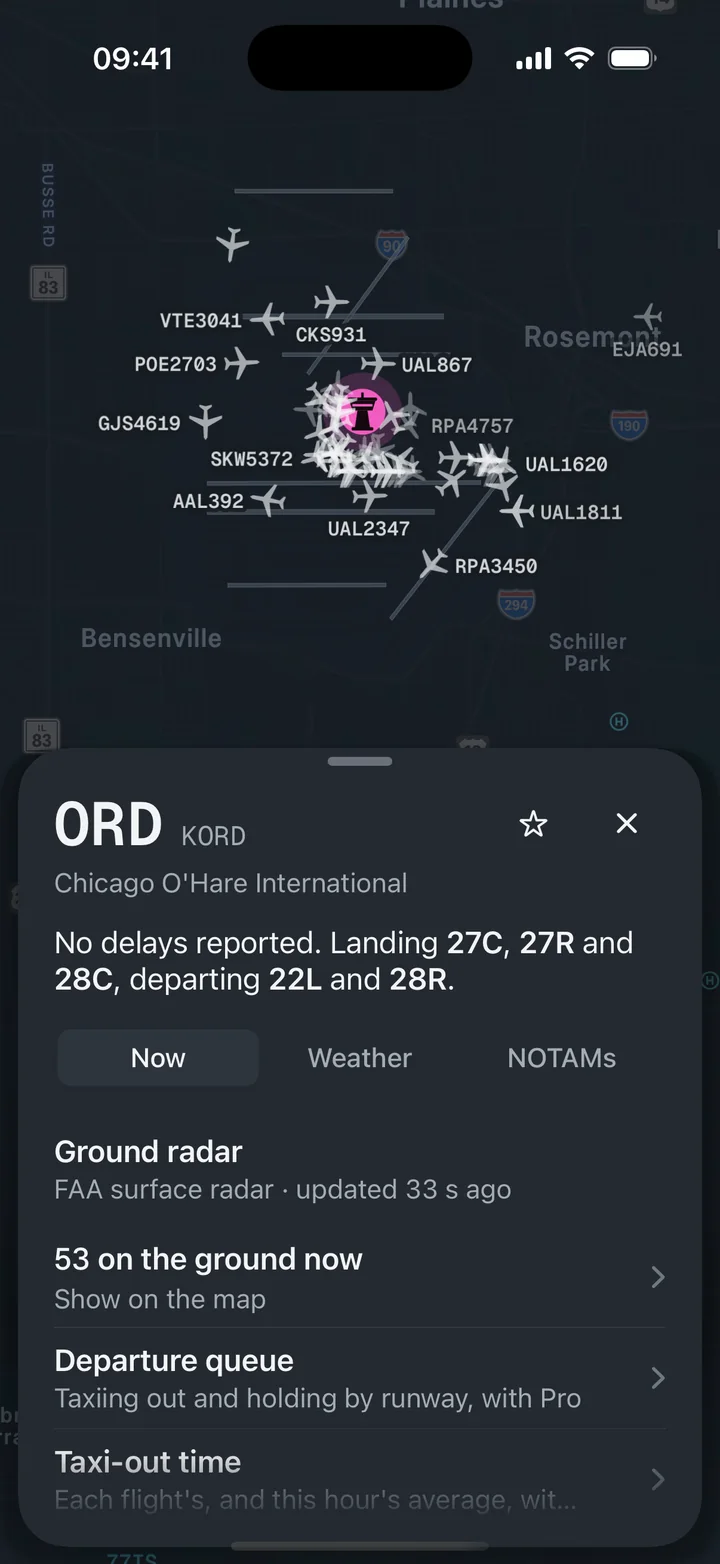
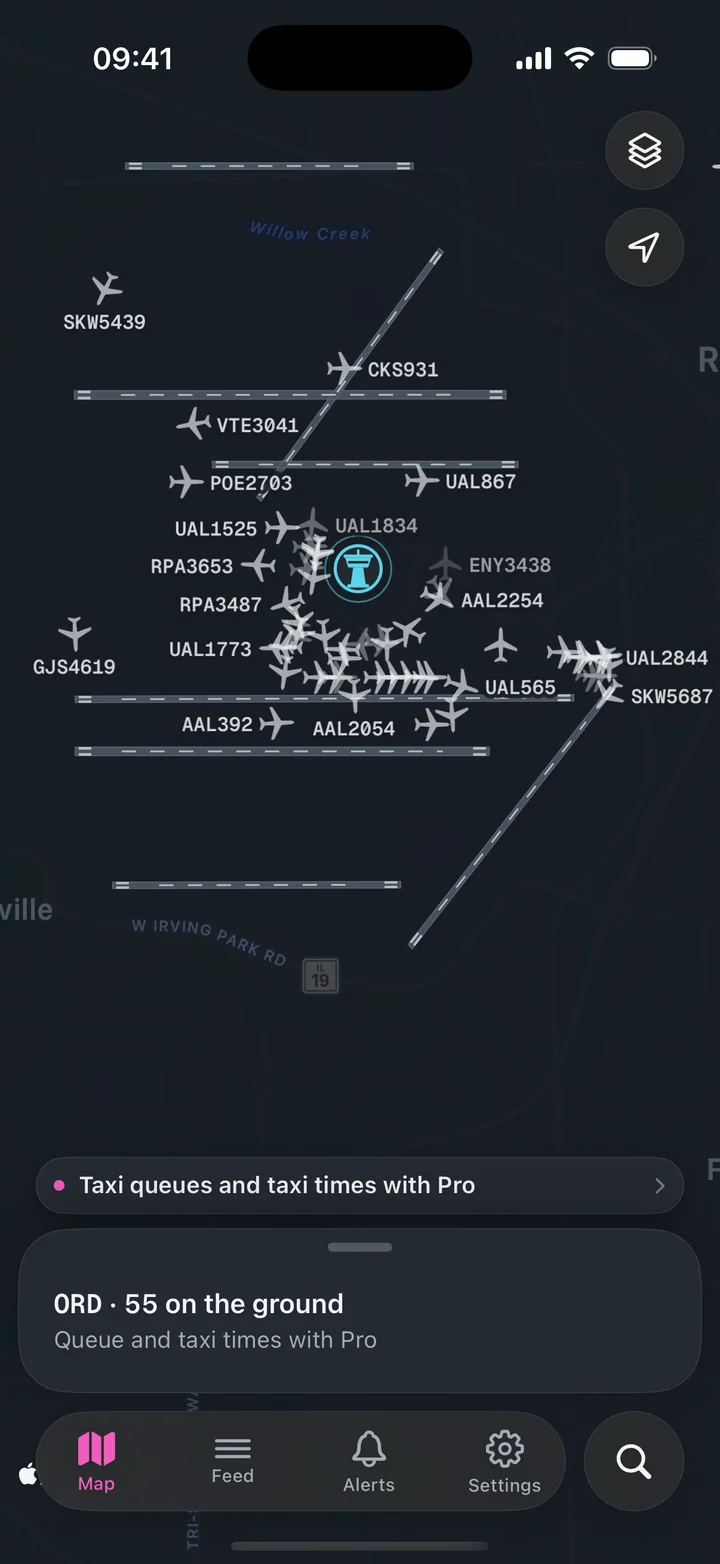
Yes, at the roughly 40 largest US airports, which have FAA surface surveillance. The Cockpit app shows every aircraft on the ground there with its taxi state: taxiing out, holding short, on the runway, taxiing in.
What is ASDE-X?
Airport Surface Detection Equipment, Model X: an FAA system that fuses surface radar, multilateration and ADS-B to track every aircraft and vehicle on an airport's runways and taxiways. A newer system built on multilateration and ADS-B, called ASSC, covers several more airports.
How long is the taxi out at a busy airport?
It varies by airport, time of day and runway in use. At the busiest hubs in a departure push, 15 to 25 minutes from leaving the gate to takeoff is common, and much longer during a ground delay program or storm.
Why do some planes not show up on the ground?
Surface tracking depends on the aircraft's transponder. An aircraft parked with its transponder off, or in a hangar, does not appear.
What airport ground radar is
Approach radar loses aircraft as they descend below the surrounding buildings and terrain, and it was never meant to separate aircraft on taxiways. For the ground, the FAA runs a separate system. At the largest airports it is ASDE-X, which combines a dedicated surface radar on the field, a ring of multilateration receivers that triangulate each transponder's replies, and the aircraft's own ADS-B position reports.
The result is a picture of every aircraft and equipped vehicle on the movement area, labelled with its flight number, refreshed about once a second. Tower controllers use it to spot runway incursions and to work traffic at night and in fog, when they cannot see the taxiways from the cab.
Which airports have it
ASDE-X runs at 35 of the busiest US airports, including Atlanta, O'Hare, Dallas Fort Worth, JFK and Los Angeles. A newer system called ASSC (Airport Surface Surveillance Capability) covers several more, such as San Francisco and Cleveland. The FAA shares the surface tracks through its SWIM data service, which is where Cockpit's ground radar comes from.
Taxiing, holding, departing
- Pushback and spot out. The aircraft leaves the gate and the ramp, and crosses the point where ground control takes over.
- Taxiing out. Moving toward the departure runway on the taxiways, following the route ground control gave.
- Holding short. Stopped at the line before the runway, waiting for the tower. At a busy airport several aircraft wait in line here.
- Line up and wait, then takeoff. Cleared onto the runway, then cleared for takeoff.
- Landing roll and taxi in. After touchdown the aircraft exits the runway and taxis to its gate, sometimes crossing other runways on the way.
The departure queue
At peak times the busiest hubs push 40 or more departures an hour off a single runway, and every one of them has to wait its turn at the hold line. The length of that line, more than anything else, decides how long you sit on the taxiway after the doors close.
Seven aircraft taxiing out and four holding short at one runway is a normal afternoon at a big hub. Twenty is a delay program in the making.
Weather changes the picture fast. A wind shift that forces a runway change can send a whole line of aircraft to the other end of the airport, and a thunderstorm nearby stops departures entirely until it moves. The airport's weather page and the FAA status at the top of each airport page show both.
How to watch it
Each covered airport page on this site shows how many aircraft have a live surface position and the most recent takeoffs, landings and departures from the gate. The Cockpit app shows the whole surface live, with the queue at each runway and the average taxi out time over the last hour.
Ground radar in the Cockpit app
Every plane on the ground at about 40 US airports, with who is taxiing out, who is holding short and how long the departure queue is.