Quick answers
What does TFR mean in aviation?
Temporary flight restriction: an FAA notice that closes or limits a defined area of airspace, usually a circle with a floor and a ceiling, for a set time. It is published as a NOTAM.
How big is a presidential TFR?
Typically two circles around the place being visited: an inner core of about 10 nautical miles closed to almost all flights, and an outer ring of about 30 nautical miles where flights are allowed only under strict conditions, from the surface up to just below 18,000 feet.
Do TFRs apply to drones?
Yes. Recreational and commercial drone pilots must stay out of active TFRs. Flying a drone in one can bring fines, criminal charges, and in security TFRs, the drone being taken down.
Is there a flight restriction over stadiums?
Yes. A standing FAA restriction, published as a permanent NOTAM rather than a new TFR each time, covers major league baseball, NFL and NCAA Division I football games at stadiums with 30,000 or more seats, and major motor races: 3 nautical miles around the venue, up to 3,000 feet above the ground, from one hour before to one hour after the event.
What a TFR is
A TFR is a NOTAM that turns a piece of airspace into a no-go or restricted area for a limited time. Each one has a center, a radius or shape, a floor and a ceiling, a start and an end, and a reason. Most are small and short. Some, like the restrictions around Washington, DC, are permanent and are not TFRs at all but standing special flight rules.
The FAA issues TFRs under different federal rules, and the rule decides who may still fly inside: emergency and law enforcement flights almost always can; airliners on their normal routes usually can; private pilots and drones usually cannot.
The kinds of TFR
- Disasters and hazards. Wildfires, floods, chemical spills, building collapses, so firefighting and rescue aircraft are not crowded by sightseers and news helicopters.
- VIP and presidential. Around the President, the Vice President and some other officials while they travel or stay somewhere.
- Security. Large public events and other national security needs.
- Sporting events. The standing stadium restriction (a permanent NOTAM for large stadiums on game day), plus specific TFRs for events like the Super Bowl.
- Space operations. Rocket launches and reentries, often over the ocean off Florida, Texas and California.
- Air shows. The display area and the aircraft performing in it.
Presidential and VIP TFRs
VIP TFRs are the ones most likely to affect travellers and pilots, because they are large and move with the person they protect. The usual shape is a 10 nautical mile inner core and a 30 nautical mile outer ring, from the surface to 17,999 feet. Airports inside the core can be closed to private flights for the whole visit. The presidential TFR page lists the current and upcoming ones.
Pilots who stray into a VIP TFR are intercepted, usually by a fighter or a Coast Guard helicopter, and met by law enforcement on landing.
Drones
TFRs apply to every unmanned aircraft, including small recreational drones. Before flying, drone pilots should check the area with the FAA's B4UFLY tools or an authorized app, and remember that a stadium TFR applies even if you are flying in your own backyard a mile away. Many TFRs are announced only hours before they start.
How to check TFRs today
The flight restrictions page lists every active and upcoming TFR over the US in plain English, with its size, altitudes and times, updated every few minutes. Pilots planning a flight must use an official FAA briefing source; this site is reference information and is not for navigation.
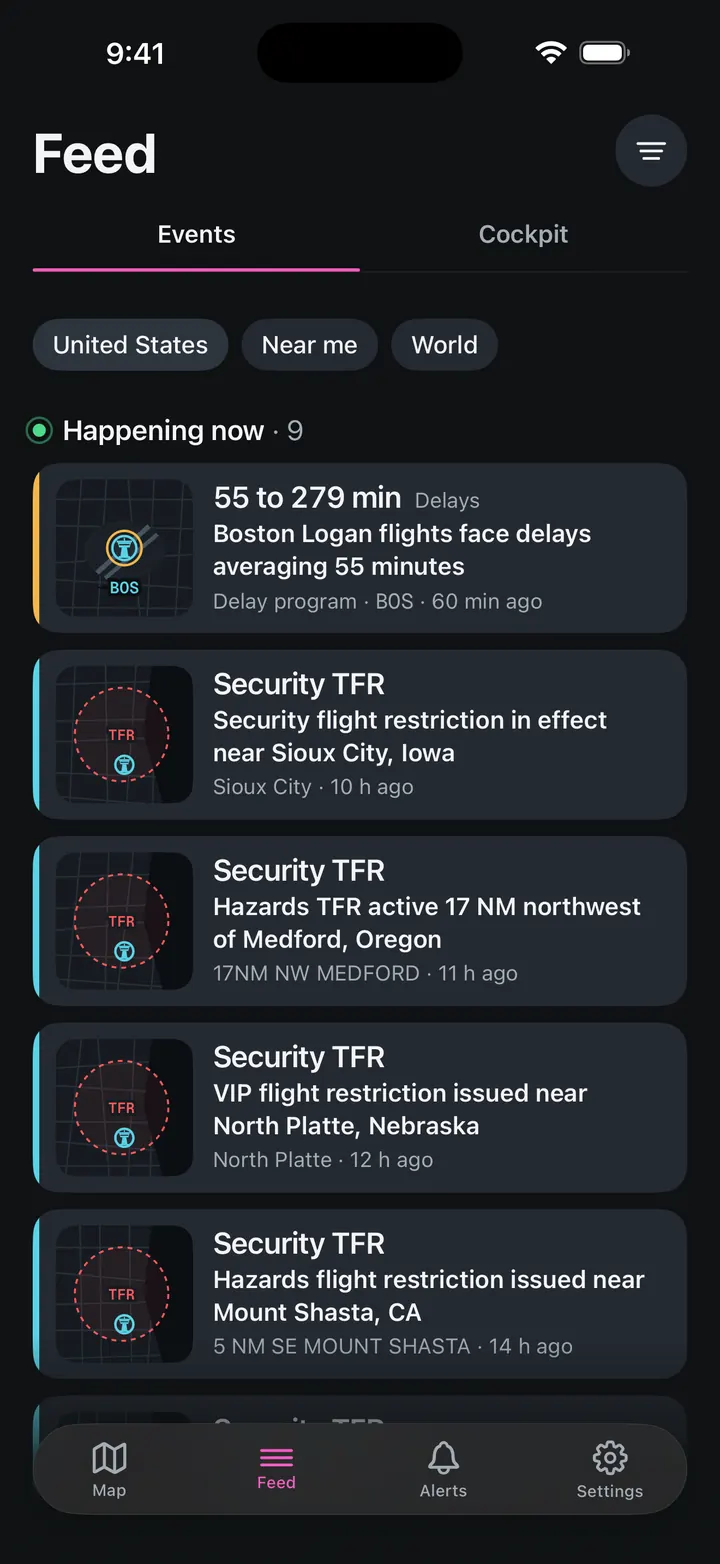
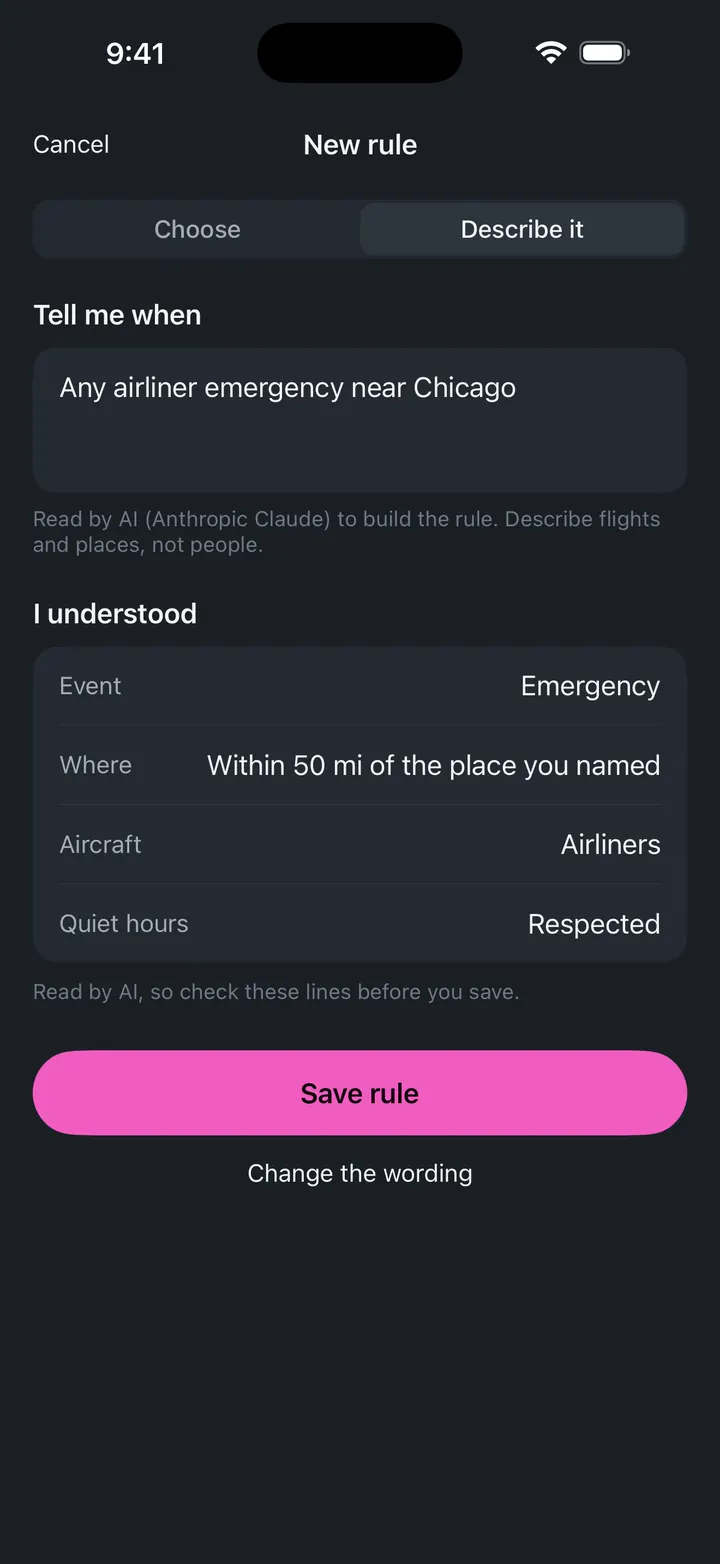
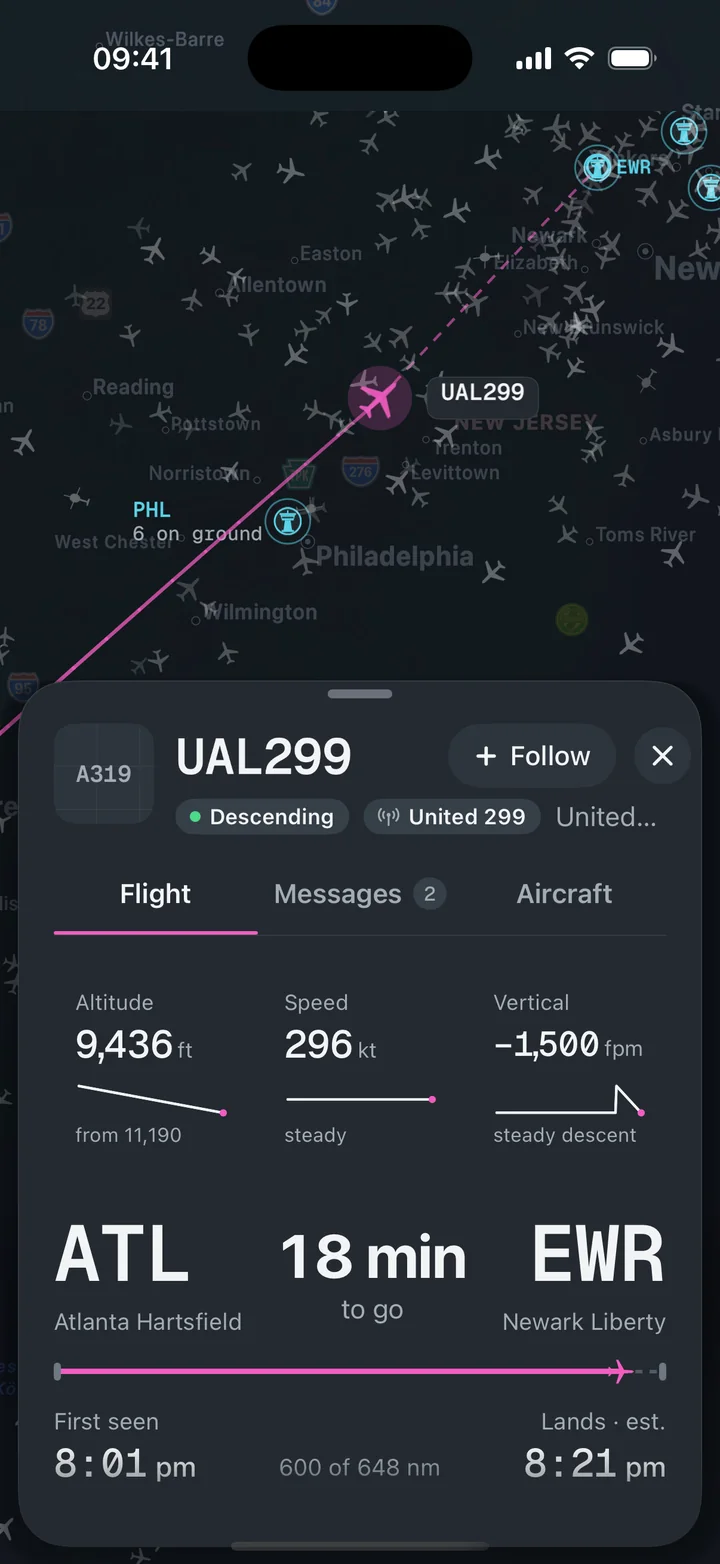
Flight restrictions in the Cockpit app
Every active and upcoming TFR on the live map, with the traffic around it.