Quick answers
How do I check if there is a ground stop at an airport right now?
Look the airport up on the FAA's National Airspace System status, or on its page on this site, which reads the same feed every few minutes. If there is no ground stop, delay program, closure or delay listed, the FAA is not holding traffic for that airport.
Does FAA airport status show my flight's delay?
No. It shows delays the FAA imposes on traffic to or from an airport, for weather, volume, runway or equipment reasons. A delay caused by the airline (crew, maintenance, a late inbound aircraft) never appears there.
How often is FAA airport status updated?
The FAA updates it as programs are issued, extended or cancelled, often several times an hour on a busy weather day. This site checks it every few minutes.
What does "no FAA delays" mean?
The FAA has no ground stop, delay program, closure or reported delay of 15 minutes or more for that airport. Individual flights can still be late for their own reasons.
Where FAA airport status comes from
Traffic flow across the US is managed by the FAA's Air Traffic Control System Command Center in Virginia. When an airport cannot take the traffic scheduled for it, the Command Center and the local facilities agree on a fix, and the result is published as part of the National Airspace System (NAS) status. That feed is the source behind the FAA's own status page and behind every airport page on this site.
The status is about capacity. An airport that can land 60 aircraft an hour in clear weather may only manage 40 in low cloud, and fewer still with a thunderstorm on the arrival path. When demand is higher than that number, the FAA slows the flow before aircraft take off, because waiting at the gate is cheaper and safer than holding in the air.
The five kinds of status
- Ground stop. Flights bound for the airport, from the departure airports it covers, do not depart until it ends. Used for sudden, severe problems. Issued in short steps and extended if needed. The full explanation is in ground stop vs ground delay program.
- Ground delay program. Flights still go, but each one is given a later departure time so arrivals match what the airport can land. The FAA publishes the average and maximum delay.
- Airspace flow program. The same idea applied to a piece of sky instead of an airport, often a line of storms that every flight to the Northeast has to cross.
- Arrival or departure delays. Reported when traffic is slowing without a formal program, once delays reach about 15 minutes, with a trend: increasing, decreasing or steady.
- Closure. The airport, or all of its runways, is closed. Rare at large airports, and usually short.
An airport with no listing at all is running normally as far as the FAA is concerned.
Why your airline can say something different
Airlines publish delays for every reason, and most delays are not the FAA's. A late inbound aircraft, a crew that has not arrived, a maintenance check or a catering truck will push a departure back while the FAA shows nothing. The opposite also happens: during a delay program your airline may still show an on-time departure until it receives your flight's slot.
The useful rule: if the FAA shows a ground stop or delay program for your destination, the delay is systemic, it affects every airline, and it ends when the program ends. If the FAA shows nothing, the delay usually belongs to your flight, and your airline is the only source that knows how long it will be. (En-route restrictions and reroutes can still slow some flights without any airport listing.) The guide on why flights are delayed goes through the common causes.
How to check an airport right now
- Open the airport's page, for example JFK, O'Hare or Atlanta. The first line answers whether there is a ground stop or delay now.
- For the whole country, the ground stops page lists every program in effect, with the reason the FAA gives.
- Check the weather block on the airport page: low ceilings and thunderstorms in the forecast are the usual reason a program is coming later in the day.
FAA status is reference information for travellers and enthusiasts. Pilots and dispatchers use the official FAA sources directly.
Airport status in the Cockpit app
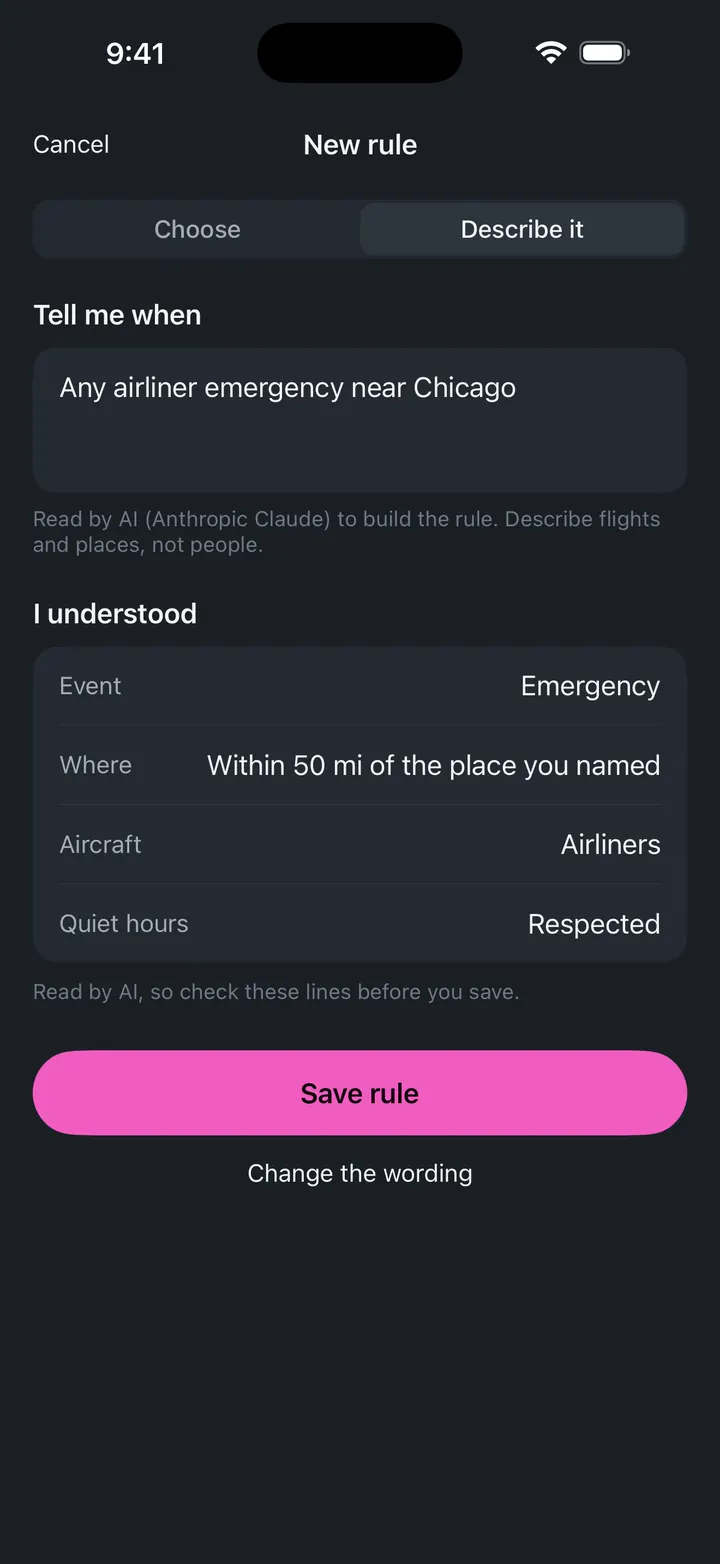
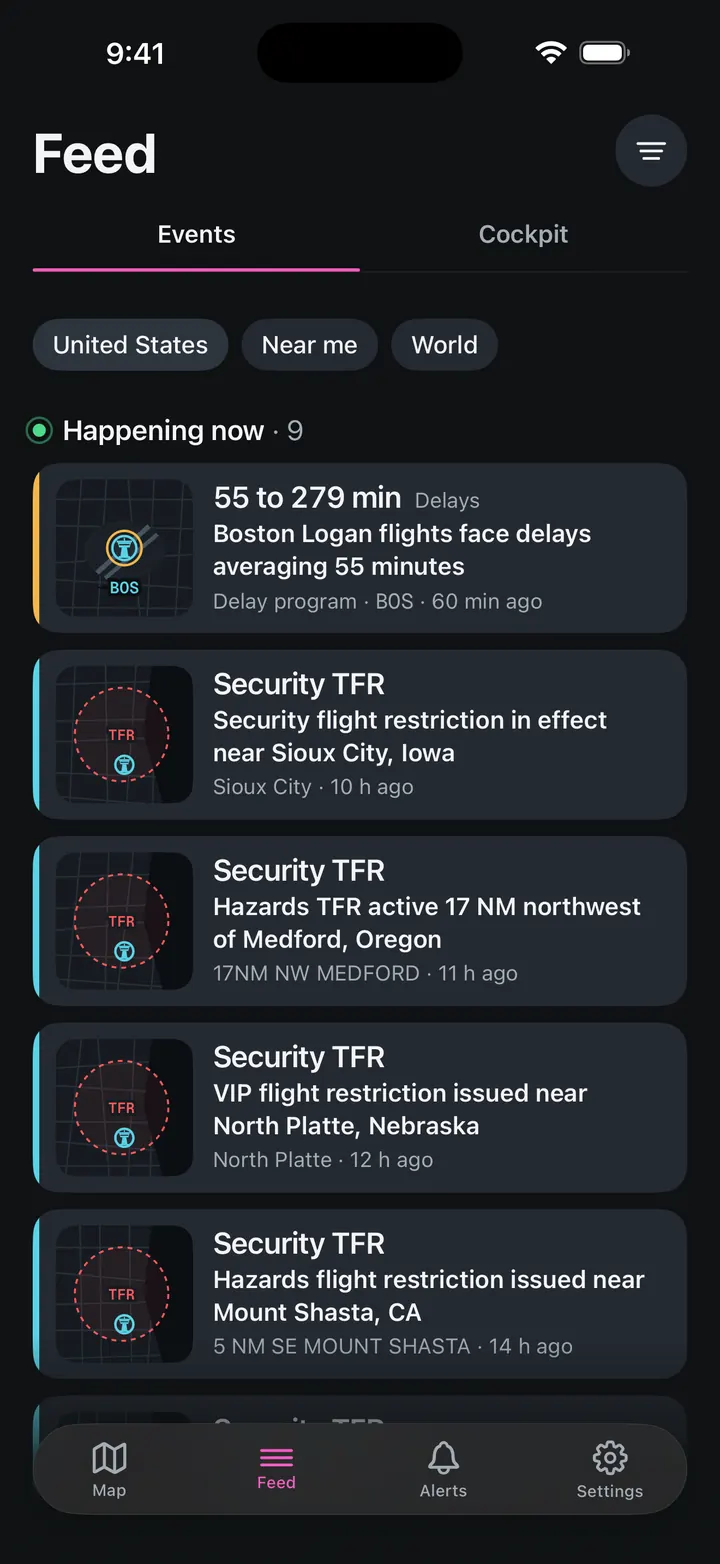
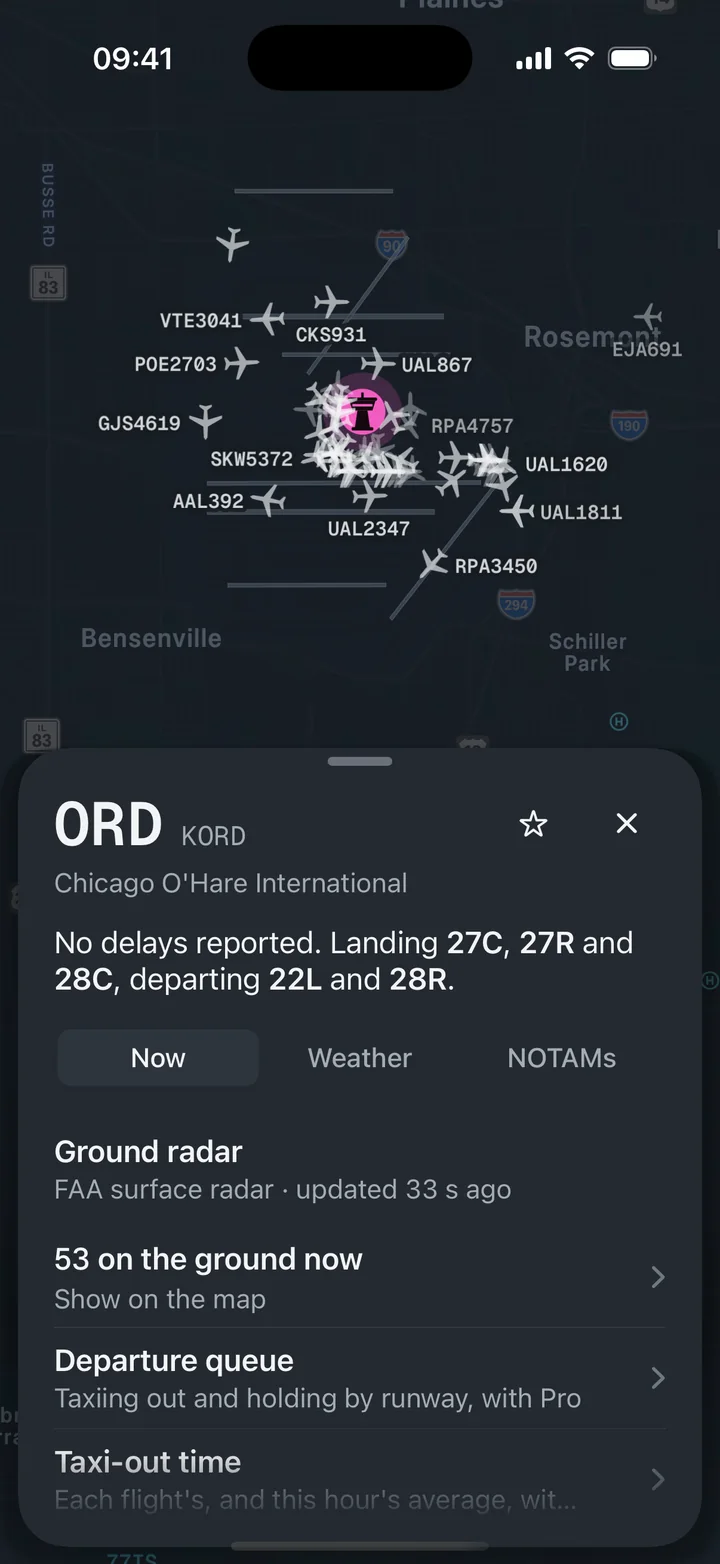
The same FAA status, live, with a push the moment a stop starts or lifts at the airports you follow.