- What the code means
- How controllers respond
- Why most 7500s are mistakes
- The emergency codes
- Recent events
What the code means
7500 is reserved for unlawful interference: a hijacking or a threat against the aircraft. Its value is that a crew can raise the alarm silently, with four digits on the transponder, without saying anything on a frequency that others can hear.
How controllers respond
Controllers do not ask about it openly. They follow a separate protocol: they confirm discreetly, notify the agencies that need to know, and give the flight whatever it requests. In the US, military aircraft may be sent to escort it.
Why most 7500s are mistakes
A crew dialling a new code, or reaching for 7700 or 7600, can pass through 7500 for a moment. Controllers then ask the crew to confirm the code, and the flight carries on. Cockpit labels these events "Squawking 7500", never "hijack", and only shows them after the code has been held and confirmed.
On a transponder, 7500 is one digit away from 7600 and 7700, and the knobs turn through it.
7700, 7600, 7500 and 1200
- 7700General emergency.
Any problem the crew considers serious enough to need priority. The flight usually keeps talking to ATC.
- 7600Radio failure.
The aircraft can fly normally but cannot transmit or receive. It continues on its last clearance and lands using light signals from the tower.
- 7500Unlawful interference.
A hijacking or a threat on board. Controllers follow a separate protocol. Rare, and often set by mistake while dialling 7600 or 7700.
- 1200VFR.
Not an emergency. The default code for aircraft flying visually in the US without a controller assignment.
Recent 7500 events over the US
None confirmed in the last 30 days. Private and general aviation aircraft are shown without callsign or registration.
All recent emergenciesEvery emergency code, live
Cockpit shows 7700, 7600 and 7500 squawks over the US as they happen, with the track and the timeline.
Every emergency in one feed
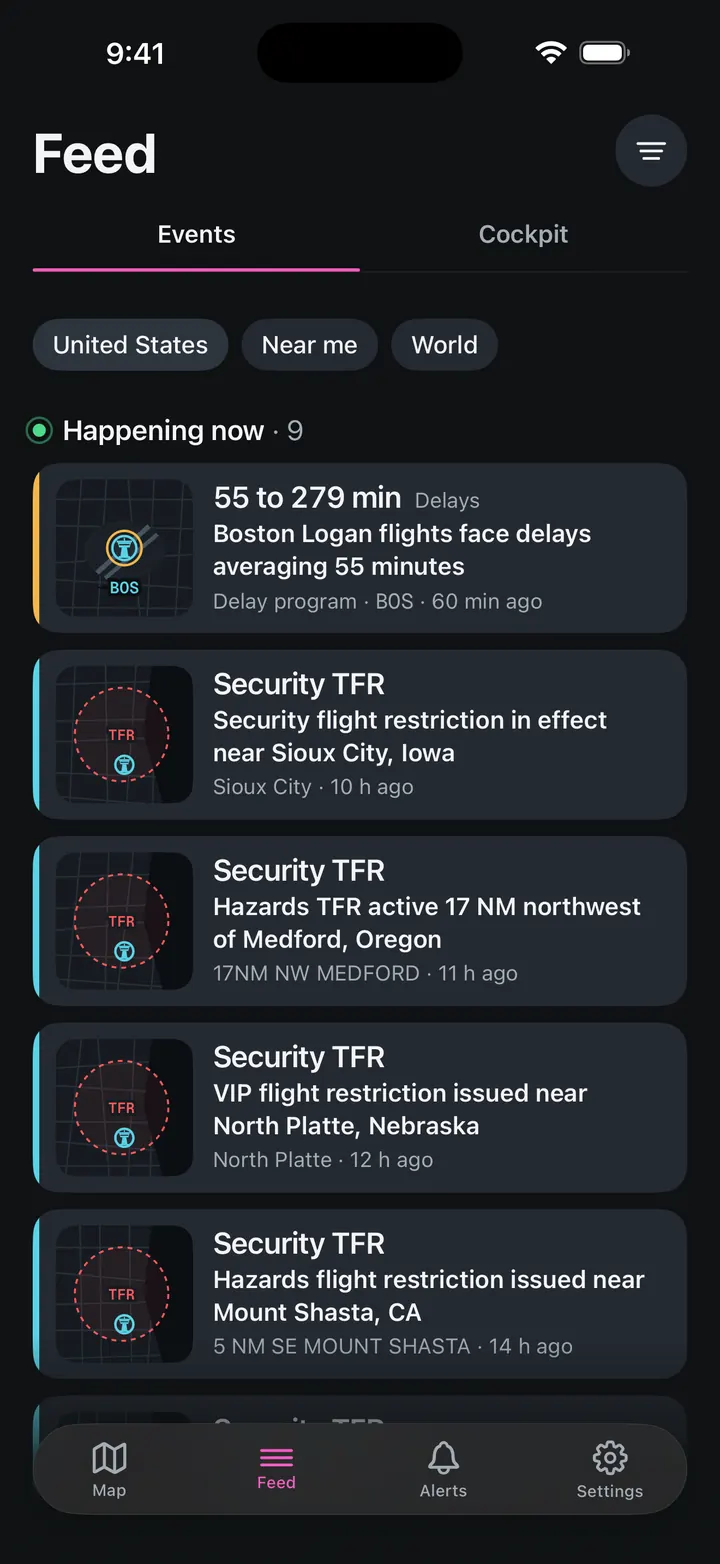
Open events on top, across the US or near you, with the aircraft and the airport.
The full story
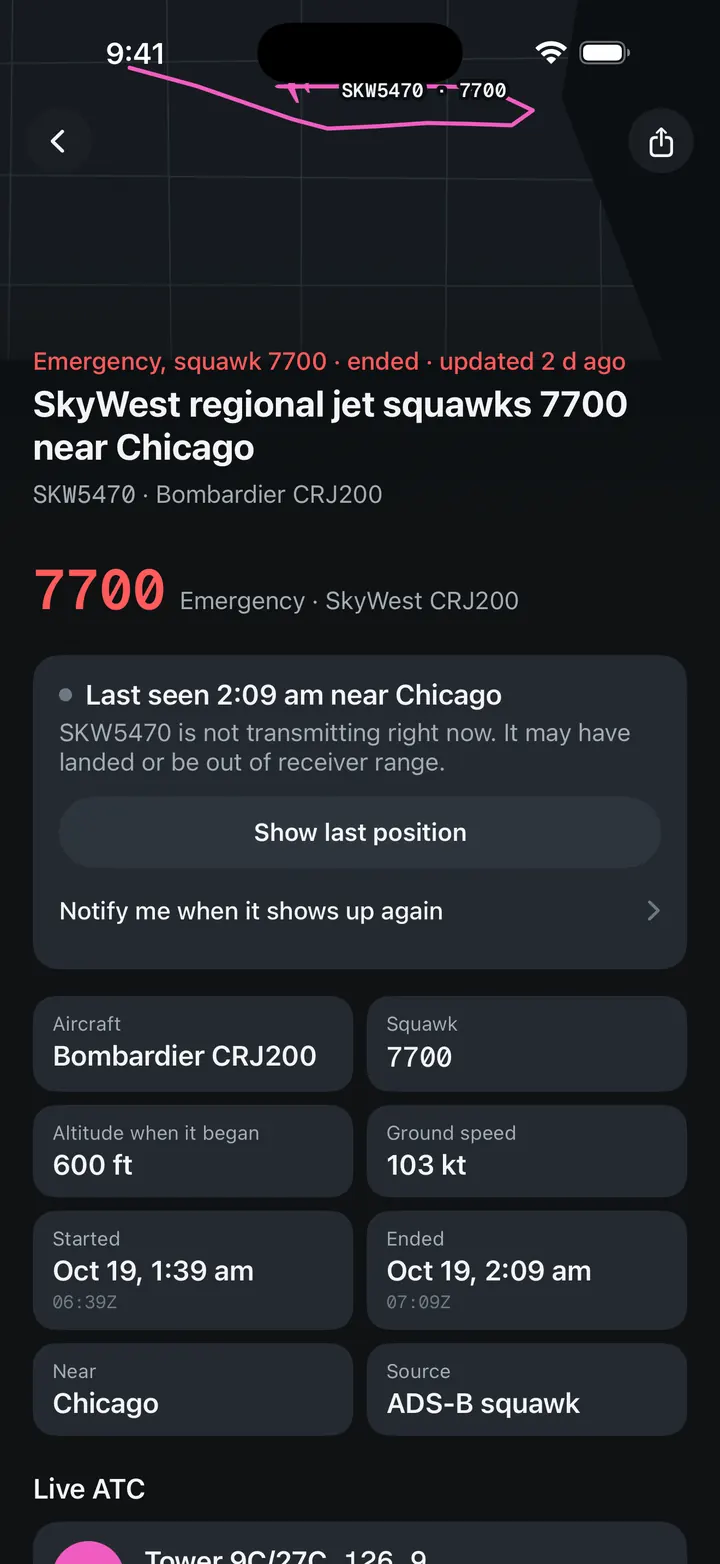
Last position, altitude when it began, the timeline and a summary, updated while it is open.
A push when it is near you
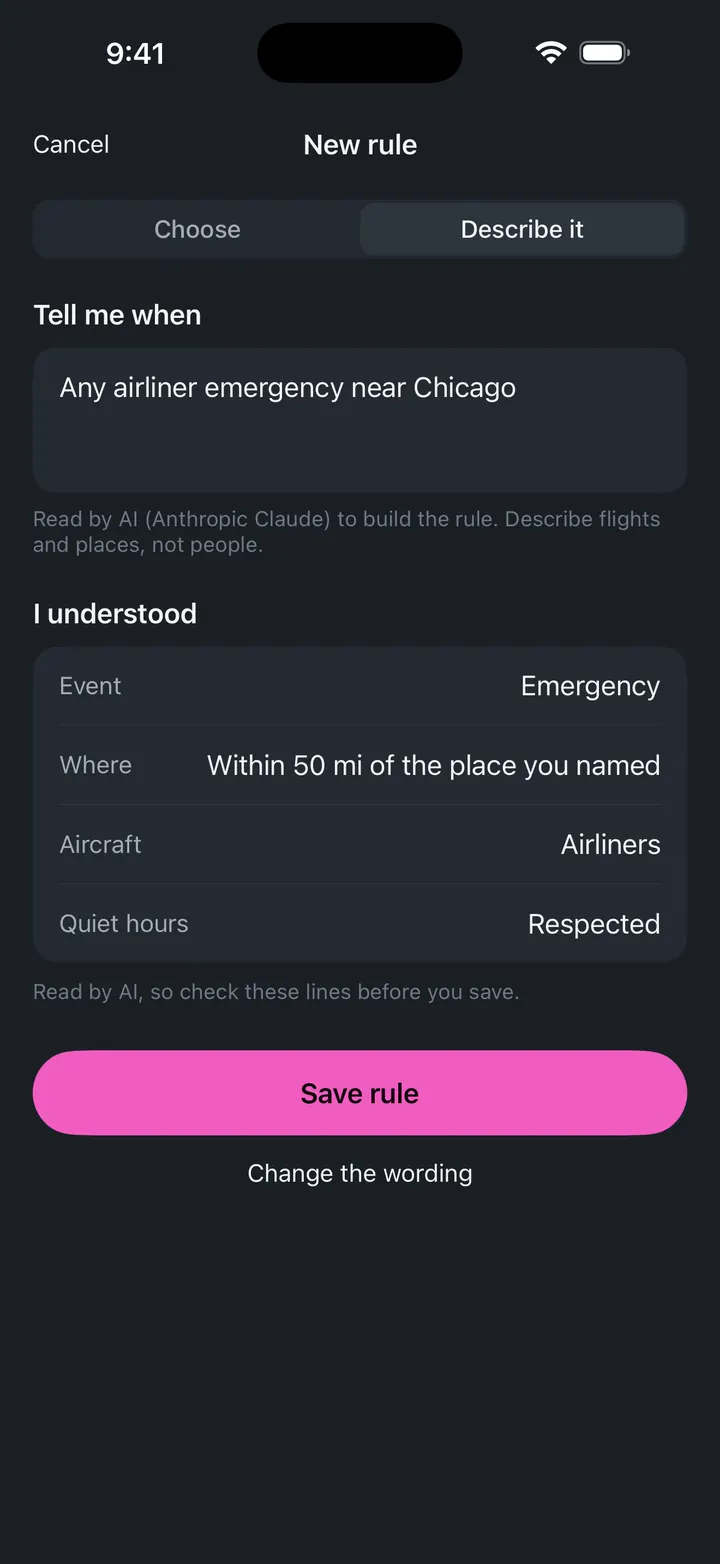
Describe the alert in words: "any airliner emergency near Chicago".