What it means
In the United States, an aircraft flying under visual flight rules that has not been given a code by ATC squawks 1200. It tells radar that a VFR aircraft is there, without identifying it individually. Other countries use different defaults: much of Europe uses 7000.
As soon as a pilot asks a controller for services, such as flight following or entry into busy airspace, the controller assigns a unique code and the 1200 goes away until the pilot is released.
Why people mistake it for something else
Trackers show the code next to the aircraft, so a cluster of 1200s around a small airport on a sunny Saturday can look like something is going on. It only means a lot of people are out flying for fun.
7700, 7600, 7500 and 1200
- 7700General emergency.
Any problem the crew considers serious enough to need priority. The flight usually keeps talking to ATC.
- 7600Radio failure.
The aircraft can fly normally but cannot transmit or receive. It continues on its last clearance and lands using light signals from the tower.
- 7500Unlawful interference.
A hijacking or a threat on board. Controllers follow a separate protocol. Rare, and often set by mistake while dialling 7600 or 7700.
- 1200VFR.
Not an emergency. The default code for aircraft flying visually in the US without a controller assignment.
See every aircraft and its code
Cockpit shows every aircraft over the US with its squawk, and opens an event only when one of the emergency codes is confirmed.
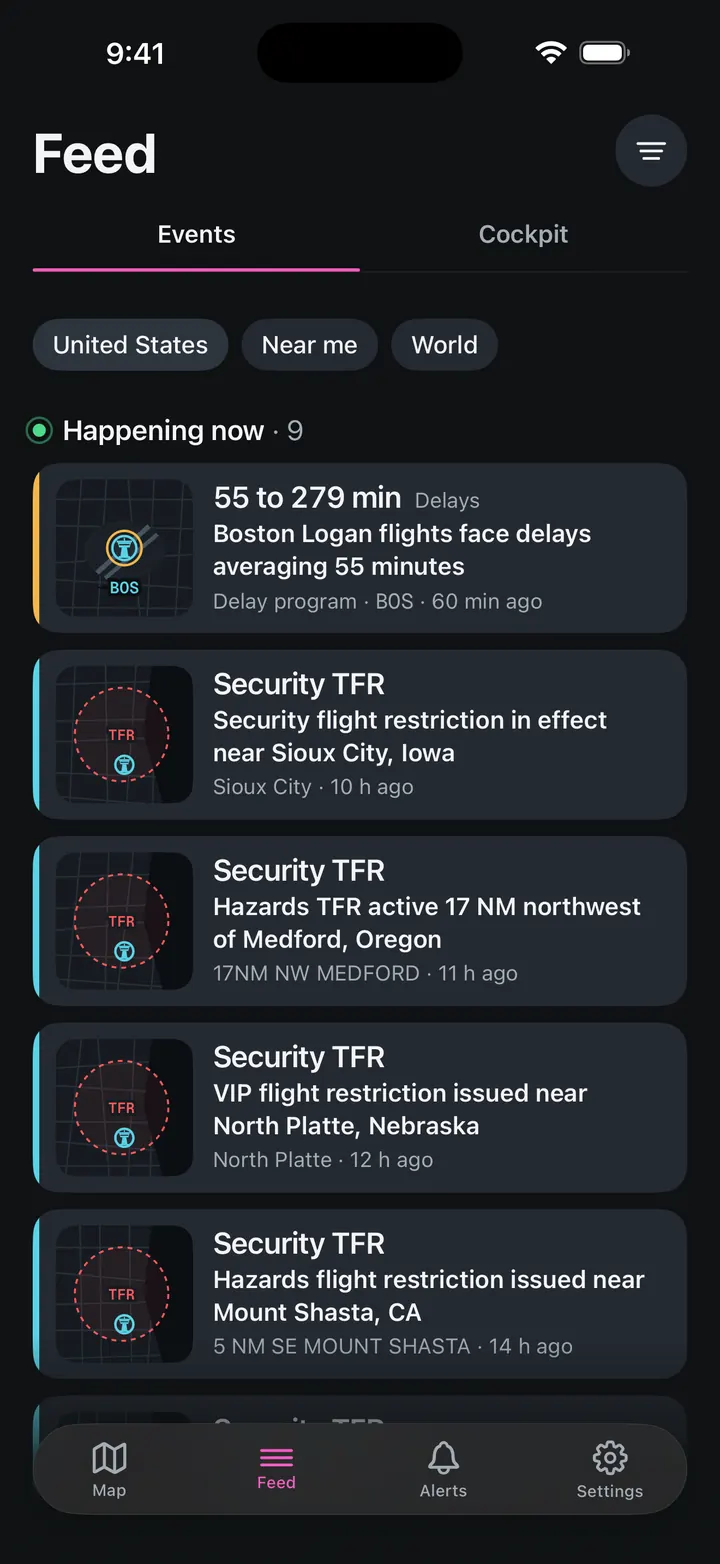
Every emergency in one feed
Open events on top, across the US or near you, with the aircraft and the airport.
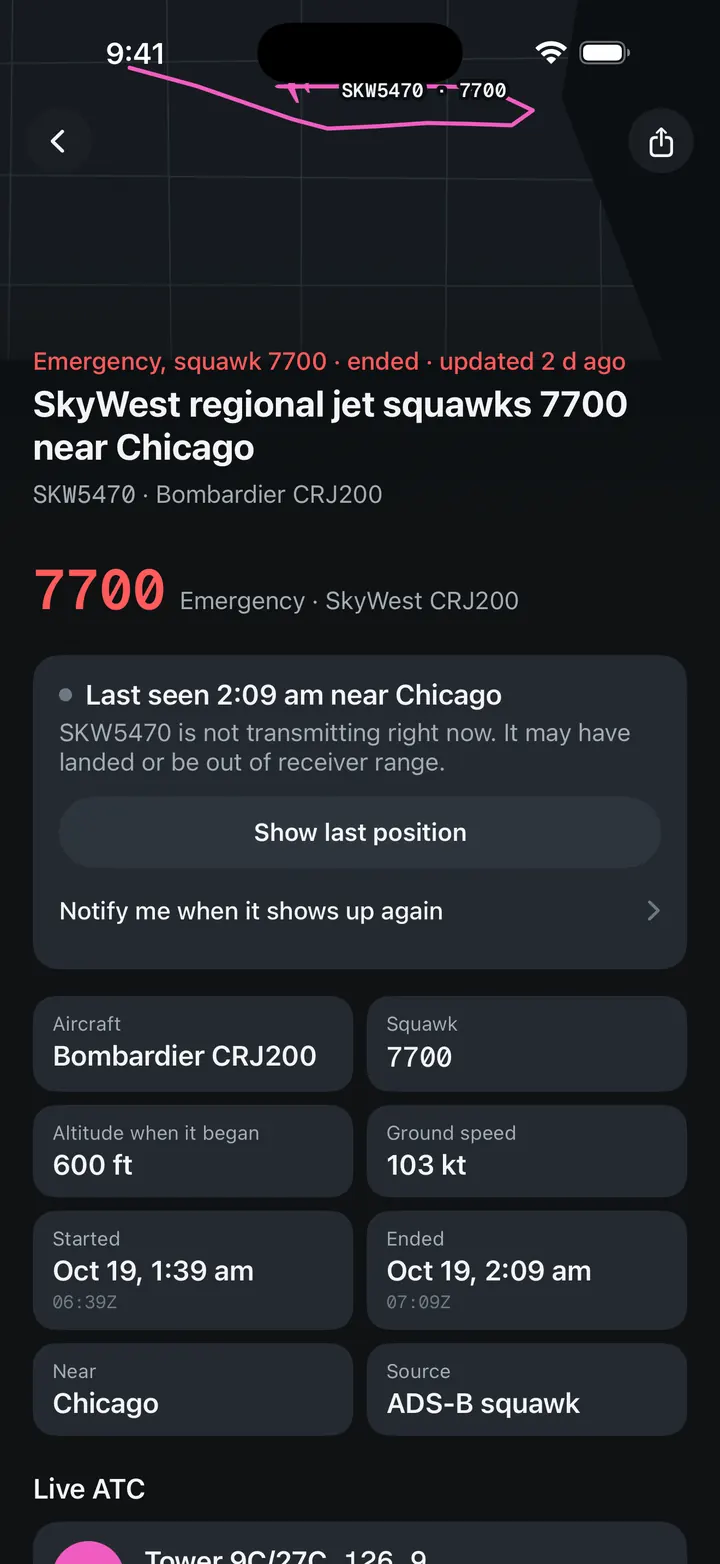
The full story
Last position, altitude when it began, the timeline and a summary, updated while it is open.
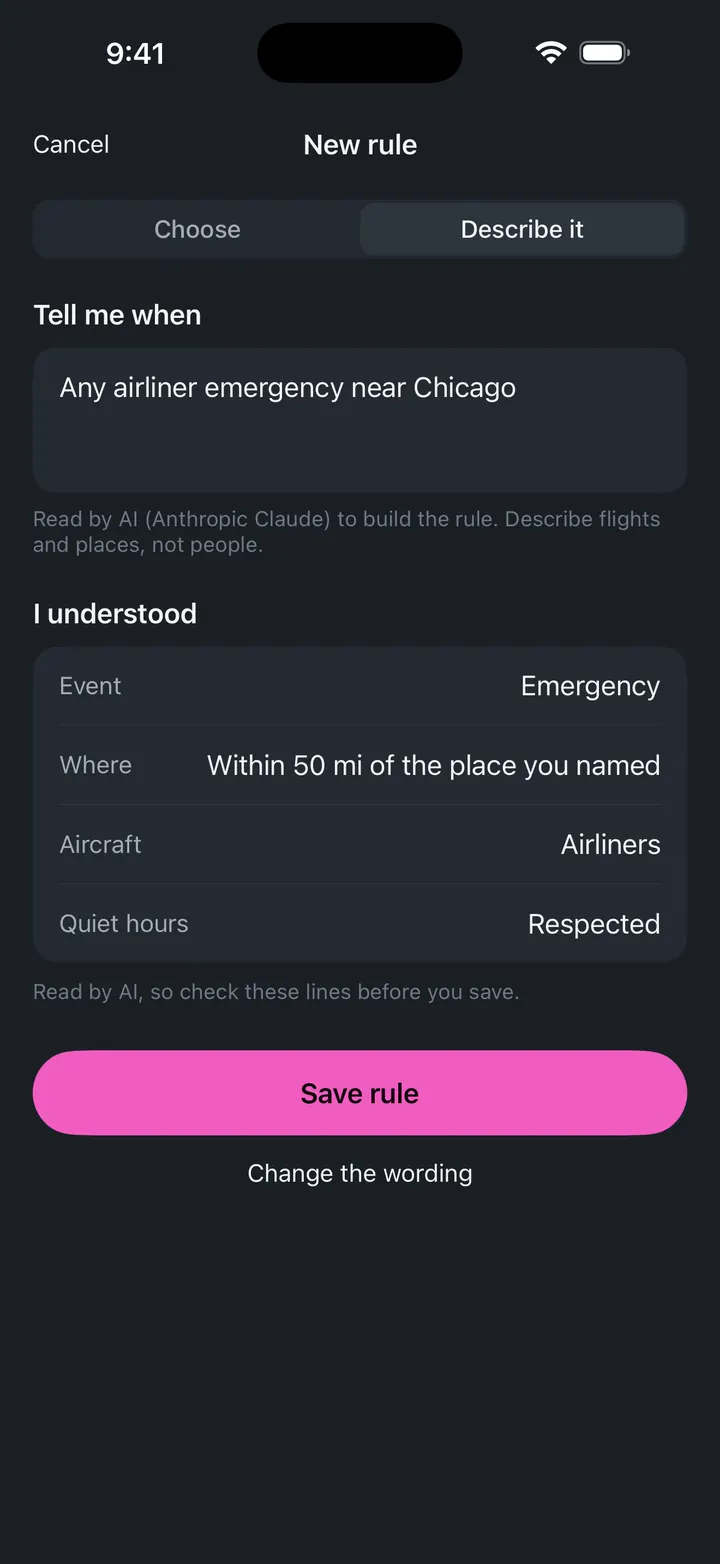
A push when it is near you
Describe the alert in words: "any airliner emergency near Chicago".